
Low milk supply is a struggle that affects more than just feeding our babies. It can affect our emotions, our identities, and even our relationships. This issue affects not only us as mothers but also our partners, leading to difficulties in a relationship if not managed correctly.
The goal of this post is to help you gain a little more self-awareness of your relationship needs and how to express them to your partner. This is a great read for new mothers and their partners, so send it to your partner. That way, you can both feel supported, seen and understood.
When women struggle with low milk supply, they may feel guilty, inadequate, and frustrated. Many women, myself included, may feel like their body is broken or that they are failing their babies. On the other side, partners might feel helpless and unsure of how to lend support, and they may also be experiencing their own struggles through the adjustment to parenthood.
As both parents adjust to their new reality, clear communication and empathy can bridge the emotional gaps that may be felt. The idea is to reach a point where mutual understanding is felt between both partners.
As someone who tends to be conflict-avoidant, I would like to introduce a framework that helped me change my perspective on communication in relationships. I have had to grow a lot to learn that conflict, unlike contention, is a helpful tool in strengthening marriage and helping people grow together. This framework is useful for understanding the why behind our unsatisfactory behaviors. The framework is especially helpful in navigating and identifying my own needs.
It is easiest to identify it as a type of bullseye. It begins in the largest circle, where our destructive behaviors sit. A few unhelpful things we may do may drive us apart, but those behaviors are driven by a core need.
Some of those behaviors may be yelling, criticism, nagging, disagreeableness, passive-aggressiveness, withholding love or physical affection, avoidance, such as being emotionally disengaged or intentionally distracted, micromanaging, lying, or defensiveness.
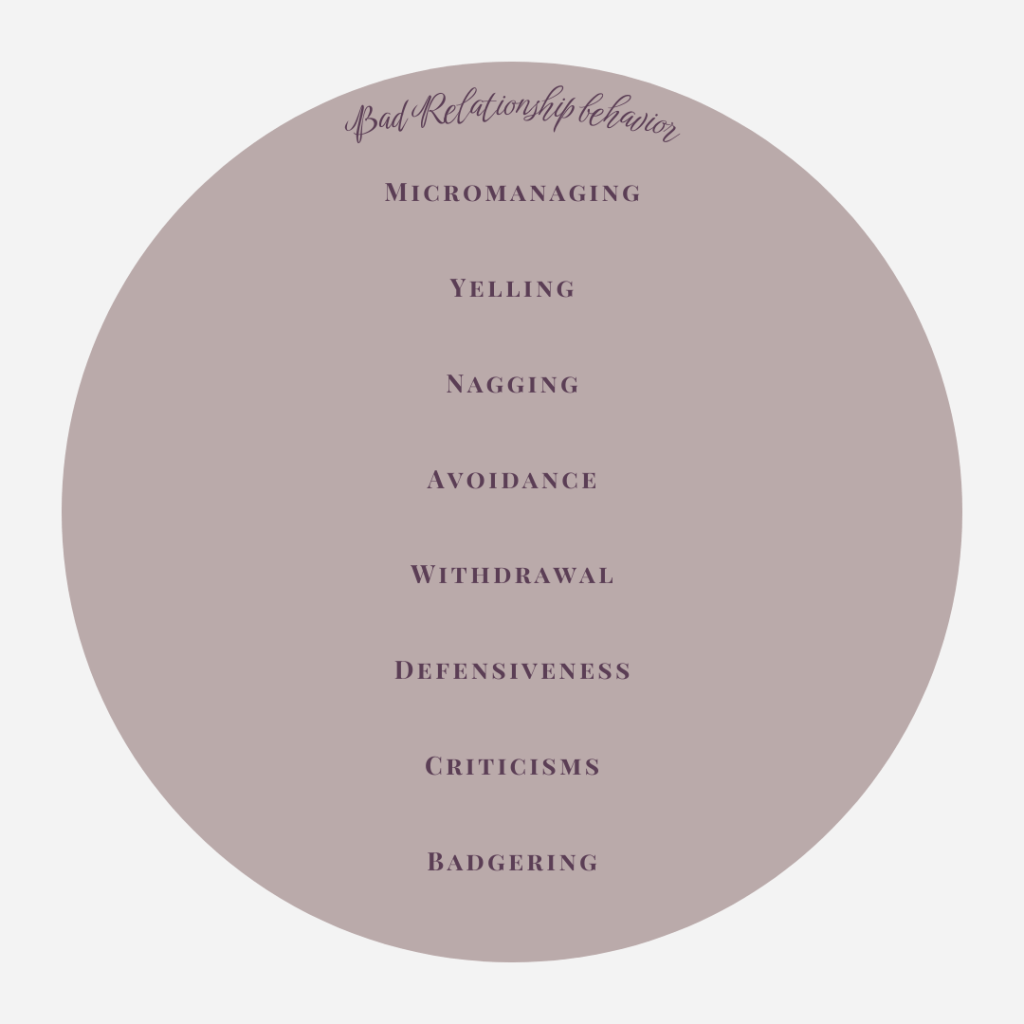
It’s normal for these behaviors to happen occasionally; however, noticing them more frequently may be a sign of a more profound unmet need. Destructive behaviors are often driven by anger, frustration, or anxiety. These emotions are primarily reactive in nature and easy to identify.
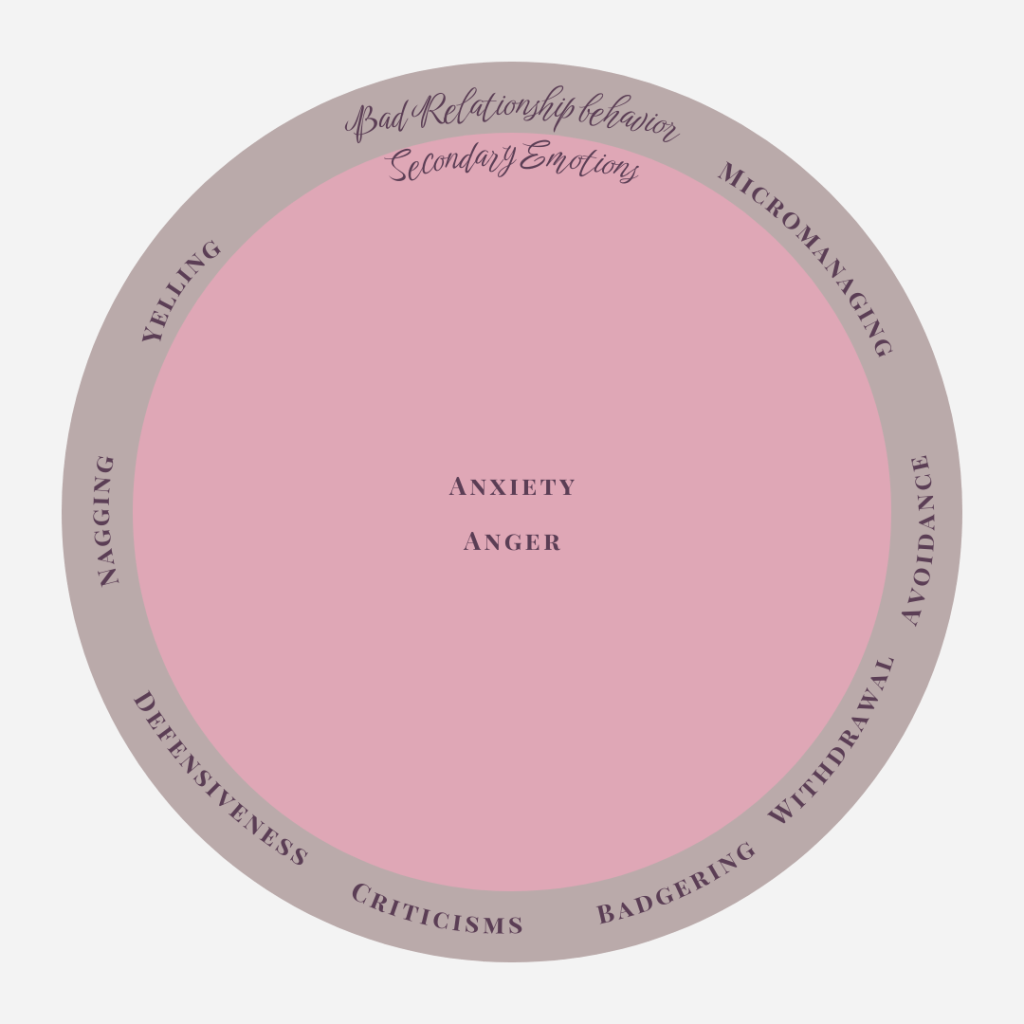
However, beneath these surface emotions, even deeper feelings often drive our reactions. These more vulnerable emotions, which are harder to identify, are often driving our reactionary emotions. These emotions are fear, shame, grief, guilt, disappointment, or loneliness.
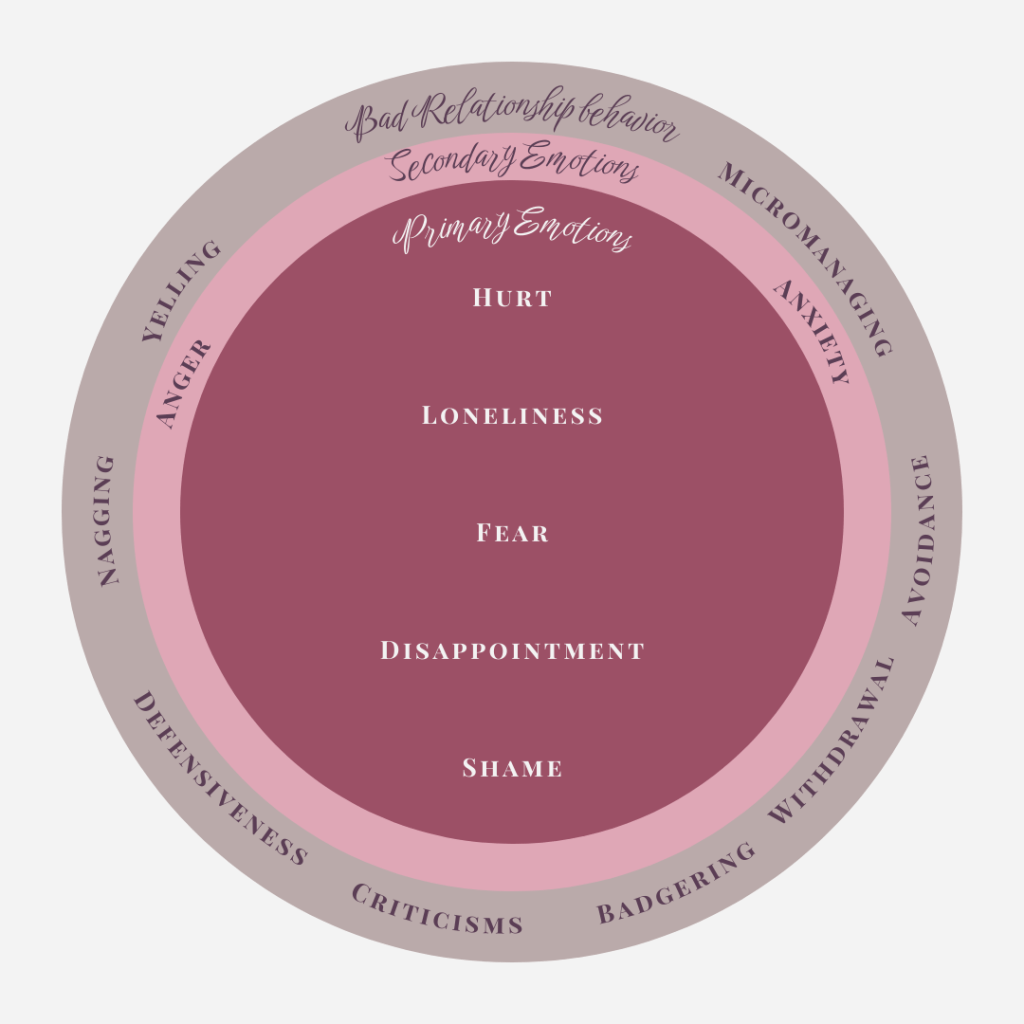
At the very core, beyond even these emotions, lie the fundamental needs that shape our relationships. At the center of the bullseye are the core relationship needs that everyone has. These are security, love and connection, autonomy, respect and fairness, growth and progress, competence and acceptance.
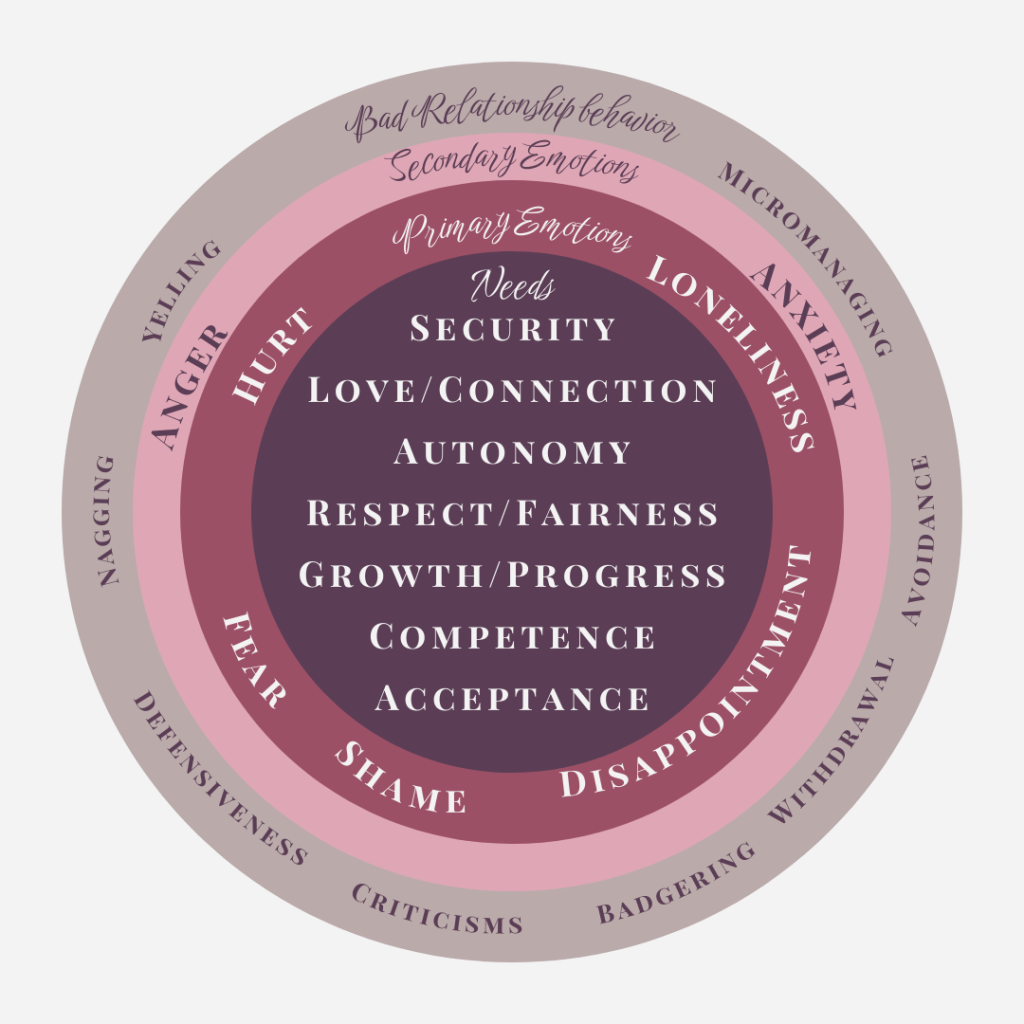
Now, it’s important to note that not all of these needs must be met by your partner. Different needs can be met by different people. However, if a problem keeps springing up in the relationship, this bullseye can help identify the problem so that we know which needs are not being met. This allows us to understand how to better connect and love each other.
You might think, “This is great and all, but how do I use it practically?” Now that we understand how unmet needs shape our behaviors, let’s explore how to address them.
First, our goal is to recognize the pattern. Start by reflecting on your own behaviors. If you notice yourself feeling frustrated, withdrawn, or resentful, pause and ask:
- What am I feeling on the surface (anger, anxiety, frustration)?
- What deeper emotions might be fueling this reaction (shame, loneliness, guilt)?
- What unmet need is at the core of this struggle (security, connection, respect)?
For example, suppose you’re feeling resentful that your partner isn’t stepping in to help with feeds. In that case, the core need might be fairness and respect—you want to feel like you’re in this together, not carrying the burden alone.
Next, the idea is to communicate your needs. Instead of reacting with criticism or withdrawal, try to express your needs directly and vulnerably. Some examples:
- Instead of: “You never help with the baby at night.”
- Try: “I really need to feel like we’re a team in this. Could we figure out a way to share the night feedings?”
- Instead of: “You don’t understand how hard this is.”
- Try: “I’m feeling really overwhelmed, and I need some reassurance that I’m doing okay.”
‘I feel’ statements shift the focus from blame to understanding, creating a safe space for connection.
Third, we need to also support our partner’s needs. Just as you have core needs, your partner does. Maybe they need to feel competent in parenting but feel unsure how to help, or they need autonomy as they navigate their own adjustment to parenthood. Ask them:
- “What’s been hard for you in this transition?”
- “How can I support you better?”
By making space for their experience, too, you create a foundation of mutual understanding rather than one-sided frustration.
Tonight, take five minutes with your partner to discuss one challenge you’ve faced in parenting and identify the underlying need behind it. Start with, ‘One thing I’ve been struggling with is… and I think at the core, I need…’ This small step can help open doors to deeper understanding and connection.
Navigating low milk supply (or any parenting challenge) can allow deeper connection if both partners approach it with open communication, patience, and empathy. The Relationship Needs Circle isn’t about fixing each other but about understanding each other so you can show up in ways that genuinely help.
If you’re struggling, take a step back, reflect on your core needs, and have an open, loving conversation with your partner. The more you work together, the stronger your relationship will be—not just for you but also for your baby, who will grow up in a home built on love, respect, and connection.
Sources:
https://www.byuido.org/2019/10/the-relationship-needs-circle-way-to.html
Discover more from Feeling Sufficient
Subscribe to get the latest posts sent to your email.
